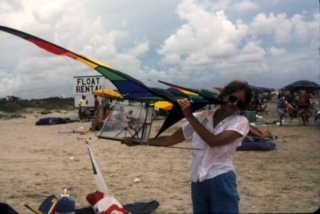
The Man Behind the Magic
An Interview with Joel Scholz, Founder of Sky Delight Kites
By Ziggy Santa Maria
There are certain people in the kite world whose names you hear over and over again. Even before you know much about them, you begin seeing their work. Their kites show up at festivals, in club members’ kite bags, in old magazine photos, at kite auctions, and across social media. Before long you realize they’ve had a much bigger impact on the hobby than you originally understood.
Joel Scholz is one of those people.
When I first joined the San Diego Kite Club, it didn’t take long before I started seeing Joel’s work. I remember watching members pull his kites out of their bags at club flys. Then I started seeing his designs in Facebook groups and online auctions. Before long I realized almost every experienced kite flyer I talked to knew who Joel Scholz was.
After getting to know Joel a bit from my bugging him on Facebook and calling him. I wanted to sit down with him and hear his story. Not just the story behind a few famous kites, but the story of how he became one of the most influential American kite designers of the last forty years. The club was so fortunate to have a donation made by Kenny Frederickson including 50 Sky Delight Kite parrots. We handed out a couple dozen of these to club members who volunteered during our work party event that took place in February this year. When I shared this with Joel, he was pleased to hear we were spreading the love of his kites around.

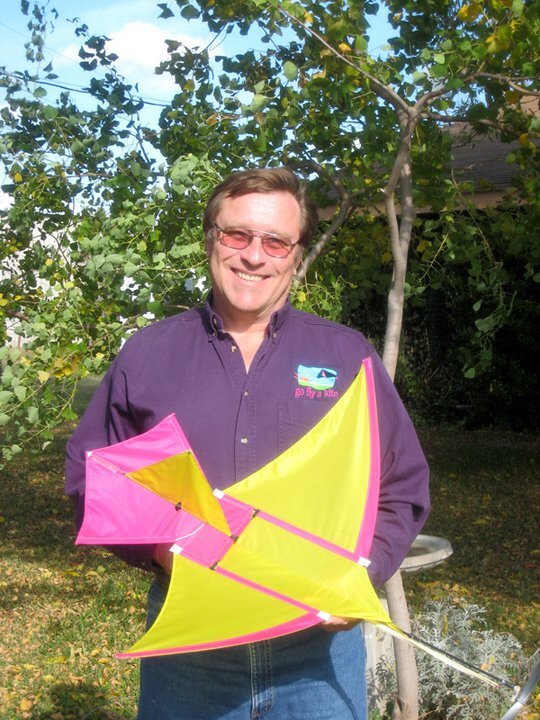
Joel was kind enough to spend over an hour with me talking about his life, his business, the kites he’s designed, and the projects that still excite him today. At 77 years old, he has no shortage of stories to tell.
It Started Like It Does for Many of Us
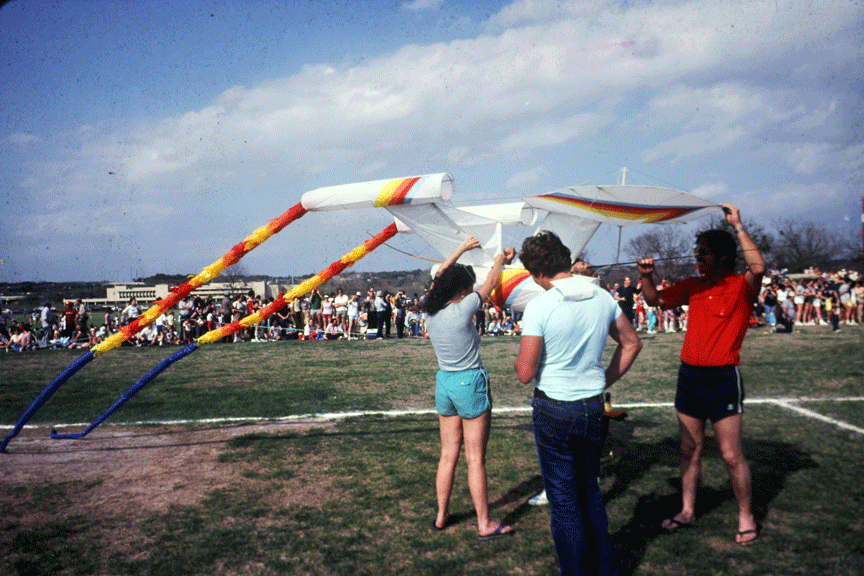
Like so many people in the kite community, Joel’s love for kites started when he was a kid. He remembers flying the Hi-Flier kites that were available at the time and always being interested in flying. As he grew older, life naturally became busy with work and responsibilities, but that interest in kites never completely disappeared. Everything changed when Joel was in his late thirties. During a spring break from work, he discovered a kite festival taking place in Austin, Texas called the Zilker Park Kite Festival. Today it’s known as the ABC Kite Fest, but back then it was one of the largest and most respected kite festivals in the country. You can watch an interview ABC Kite Fest put out on Joel by going to this YT video, CLICK HERE.
Because he had the week off, he decided to build a kite and enter the competition. He grabbed some bamboo, found a plan for a traditional Chinese bird kite, and got to work.
Joel told me, “I was gluing nylon onto the bamboo frame, It was a pretty rudimentary bird kite,” he laughed.
He didn’t even buy new material. Instead, he visited local sail makers and asked if he could dig through their scrap piles for leftover nylon fabric. Looking back, it’s amazing to think that such a simple project would end up changing the rest of his life.
Discovering There Was an Entire Kite Community
That first trip to Zilker opened Joel’s eyes to something he had never realized before. Adults flew kites too. Until then, kites had mostly been something he associated with childhood. Suddenly he found himself surrounded by adults who were just as passionate about designing, building, and flying kites as he was. That experience introduced him to the American Kitefliers Association (AKA), where he would eventually become involved in competitions and meet many of the people who helped shape American kiting.
Every year after that first festival, Joel returned to Zilker. He would enter one or more original designs into the competition, but there was always one category that especially caught his attention.
“The Most Unusual Kite.”
He admitted that was usually the category he was aiming for. Back then, Zilker was very much a competition. People spent months preparing for it. Joel lived for those competitions and they became a huge source of motivation for him as a designer. Today the event has evolved into more of a celebration of kite flying than a competition, but those early years helped launch countless careers in kite making, including Joel’s own.
The Kite That Changed Everything
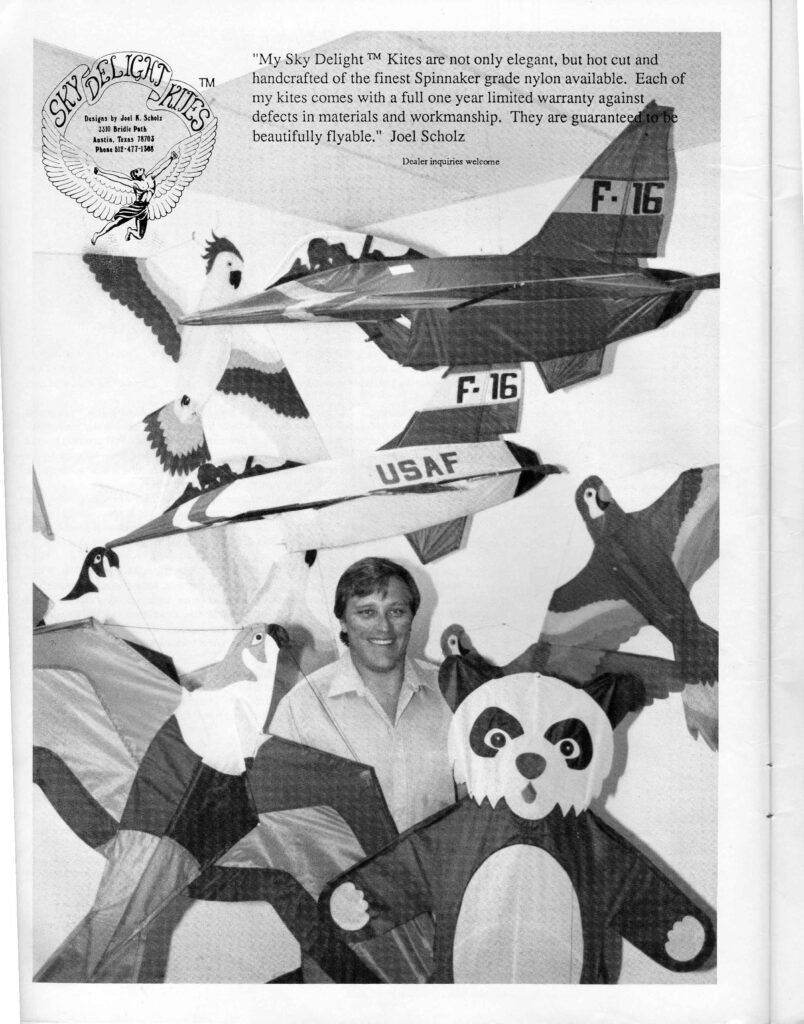
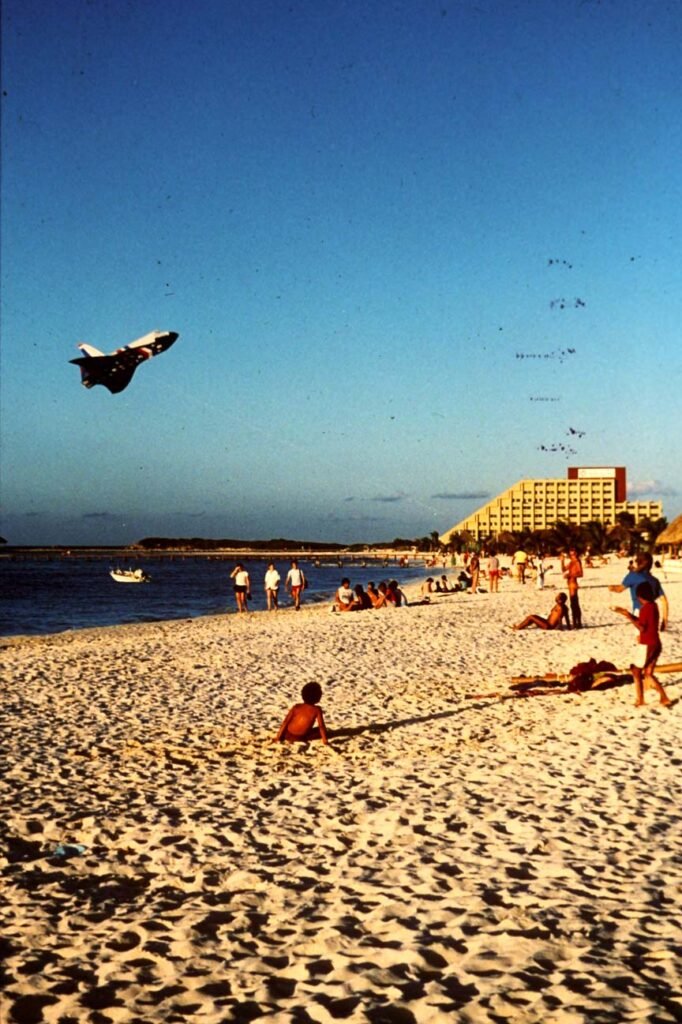
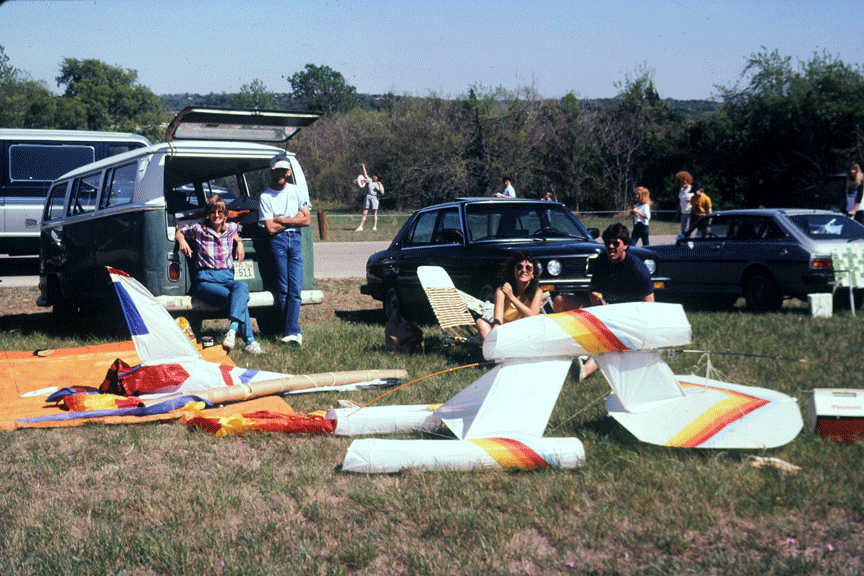
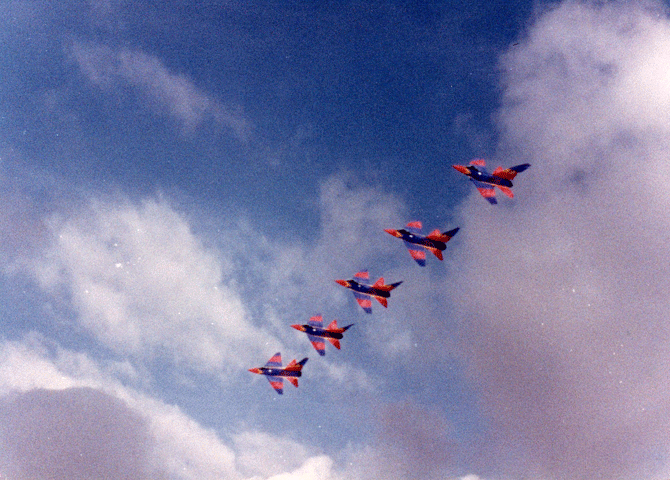
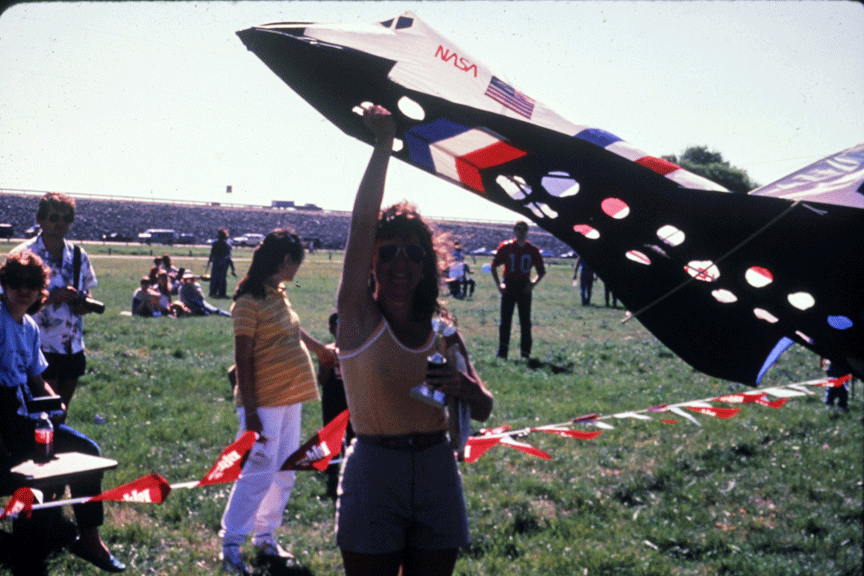
As Joel continued experimenting with new ideas, one particular design completely changed the direction of his life. He built a three-dimensional F-16 fighter jet kite. At first, it was simply another design. Then something unexpected happened. He discovered it was maneuverable. Once he realized he could actually control the flight characteristics of the kite, everything changed. Most of the airplane kites he designed were created long before he started his business. The F16 was the only airplane that he felt at the time was economically viable.
At the time Joel was working as an X-ray technologist. Like many people who eventually start a business, he had reached a point where he was becoming burned out in his profession. The F-16 gave him an idea that maybe—just maybe—he could turn this hobby into something much bigger.

Betting on Himself
Joel told me one of the biggest turning points in his life came when he made the decision to invest in himself. He borrowed $10,000 from the bank. Looking back today, that doesn’t sound like a huge amount of money for starting a business. But forty years ago, it was a significant risk. Especially for someone who admitted he knew almost nothing about the kite business.
“I didn’t know a thing about making kites or running a business around kites,” he told me.
He simply had an idea, a few successful kite designs, and enough confidence to believe he could make it work. Before taking the leap, Joel gave himself one goal.
“If I can get the Washington Aerospace Museum to buy my kites, then I’ll start my business.”
Sure enough…
They placed an order. That single purchase convinced him it was time to go all in. Sky Delight Kites was born.
Building Sky Delight Kites
Joel immediately went to work. He began producing his F-16. His aunt joined him helping sew the kites but only at the beginning. He remembers selling them for around fifty dollars each. Today that might not seem expensive, but Joel laughed as he remembered that back then many people thought any kite over twenty dollars was overpriced. Rather than lower his standards, he refused to cut corners. Quality materials mattered to him. Good construction mattered. If that meant charging a little more, so be it. Looking back, it probably wasn’t the easiest business model. But it was the one he believed in.
Joel eventually built around two hundred of the original F-16 kites. Every one of them was personally signed. After those first two hundred, he stopped producing them himself.

Learning How the Kite Business Really Worked
As Sky Delight Kites continued to grow, Joel eventually began collaborating with larger manufacturers. Companies like Go Fly a Kite provided access to materials, fittings, connectors, and manufacturing capabilities that simply weren’t available to a small operation. Eventually his relationship with Go Fly a Kite grew into licensing many of his designs. Premier and HQ would also go on to manufacture Joel’s work.
His best year as a manufacturer brought in around $225,000 in sales. Even then, Joel never considered Sky Delight to be a large company.
“It was always a really small mom-and-pop business.”
Most of his designs reached the public because larger manufacturers licensed them and produced them in much greater numbers than he ever could have on his own. That partnership helped spread Joel’s designs all over the world. It also taught him one of the realities of being a designer. People copy your work.
Joel mentioned that one of the things every designer eventually had to accept was seeing other people imitate their creations. Sometimes someone else would make far more money from one of his ideas than he ever did. He never seemed bitter about it. He simply viewed it as part of the business.
Just How Many Kites Has Joel Designed?
At one point during our conversation I realized I had never actually asked Joel a simple question.
“How many kites have you designed?”
He laughed. He honestly wasn’t sure. Joel estimates he’s designed somewhere around a couple hundred different kites throughout his career. Of those, he believes nearly one hundred actually went into production. When I asked how many kites bearing his designs were out in the world, he paused for a moment before answering.
“Tens of thousands.”
Then he added something that made me stop and think. He said he doesn’t know for certain, but it’s entirely possible there are more kites based on his designs flying around the world than those of any other American kite designer. Considering the number of companies that licensed his work over the years, that’s probably not as bold of a statement as it first sounds.

One thing I found especially interesting was asking Joel why he was willing to take such a huge financial risk all those years ago. His answer had nothing to do with business. It had everything to do with timing.
“The only reason I could do it,” he said, “was because I didn’t have children.”
If he had already started a family, he told me he never would have been comfortable borrowing the money or taking that chance.
“It was a risk,” he admitted.
Fortunately for Joel, it paid off. He was also quick to point out that not everyone who takes that kind of risk ends up with the same outcome. Sometimes timing makes all the difference. One of the questions I had been looking forward to asking Joel, was about something he had said to me during a previous conversation.
At one point Joel casually described himself as “somewhat of a has-been.”
The statement caught me completely off guard. Honestly, I couldn’t disagree more. By the time I sat down for this interview, I had already spent a couple of years becoming more involved in the kite community. During that time, I had seen Joel’s work everywhere. His kites showed up in Facebook groups almost daily. I watched San Diego Kite Club members pull his kites out of their bags at club flys. I saw them at kite auctions. Collectors talked about them. Designers referenced them. Even outside of San Diego, it seemed like every experienced kite flyer knew exactly who Joel Scholz was. So I wanted to ask him why he felt that way.
Joel paused for a moment before answering.
“Well,” he said, “there used to be a time when there were full-time kite magazines and hundreds of mom-and-pop manufacturers and kite stores.”
He explained that for many years he was used to seeing his work everywhere. His kites appeared in magazine articles, photographs, competitions, retail stores, festivals.
Back then, the kite industry looked very different than it does today. Now those magazines are mostly gone. Many of the small kite shops have disappeared. The industry has changed. Joel admitted that he also isn’t producing kites commercially anymore. If he makes a kite today, it’s usually for himself rather than for retail production. He’s retired. These days his social life revolves mostly around Facebook, and he and his wife generally keep to themselves.
After hearing his explanation, I shared my own thoughts. I told Joel that while the kite world has certainly changed, I don’t think his legacy has changed with it. Even though magazines aren’t what they once were, competitions have evolved or diminished in occurances and manufacturing has shifted overseas…
I still see Joel’s work everywhere. His kites continue flying decades after they were first designed. They’re still being bought and sold, collected and still being admired.
Every experienced kite flyer I know recognizes his work almost immediately. I’ve said it before, and I told Joel the same thing during our conversation. I believe his legacy has already been cemented. Once your work reaches that point, I don’t think the phrase “has-been” applies anymore. History has already decided where you belong. Joel appreciated these sentiments but I don’t know if I completely changed his mind, I hope he understands just how respected he continues to be throughout the kite community.
Looking Back at a Lifetime of Designing
Naturally our conversation eventually turned back toward kites. I asked Joel a question that I imagine isn’t very easy to answer. Out of every kite you’ve ever designed…
Which one are you most proud of? Not necessarily the one that made the most money. Not necessarily your personal favorite. But if you could put one kite on a mantel as the defining achievement of your career, which would it be?
Joel said, “There really isn’t just one.”
Instead, he described what he called milestone kites. Each represented a different chapter of his career. One of the first milestones Joel mentioned was the Neptune.

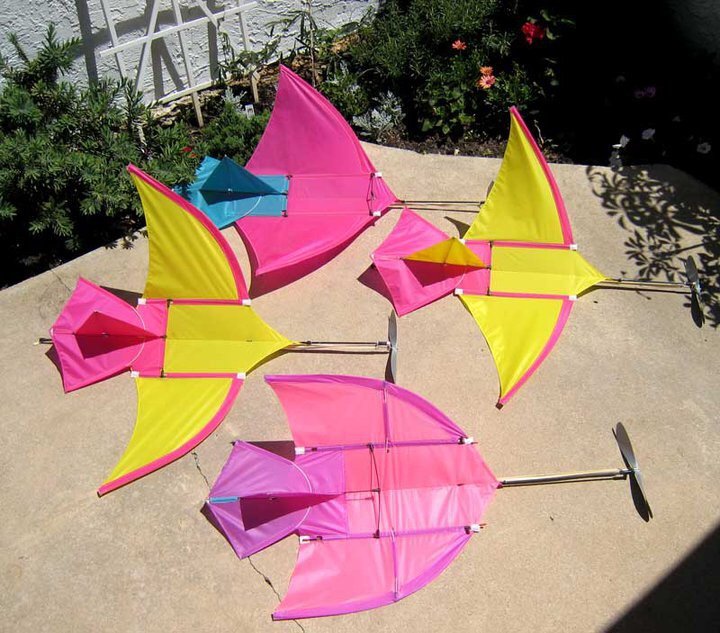
The Neptune was a dual-line sport kite designed to resemble a fish. He explained that it marked an important point in his career because it helped move him beyond being viewed as simply another small kite manufacturer.
Another important design was the Beautiful Evil, one of his memorable quad-line kites.
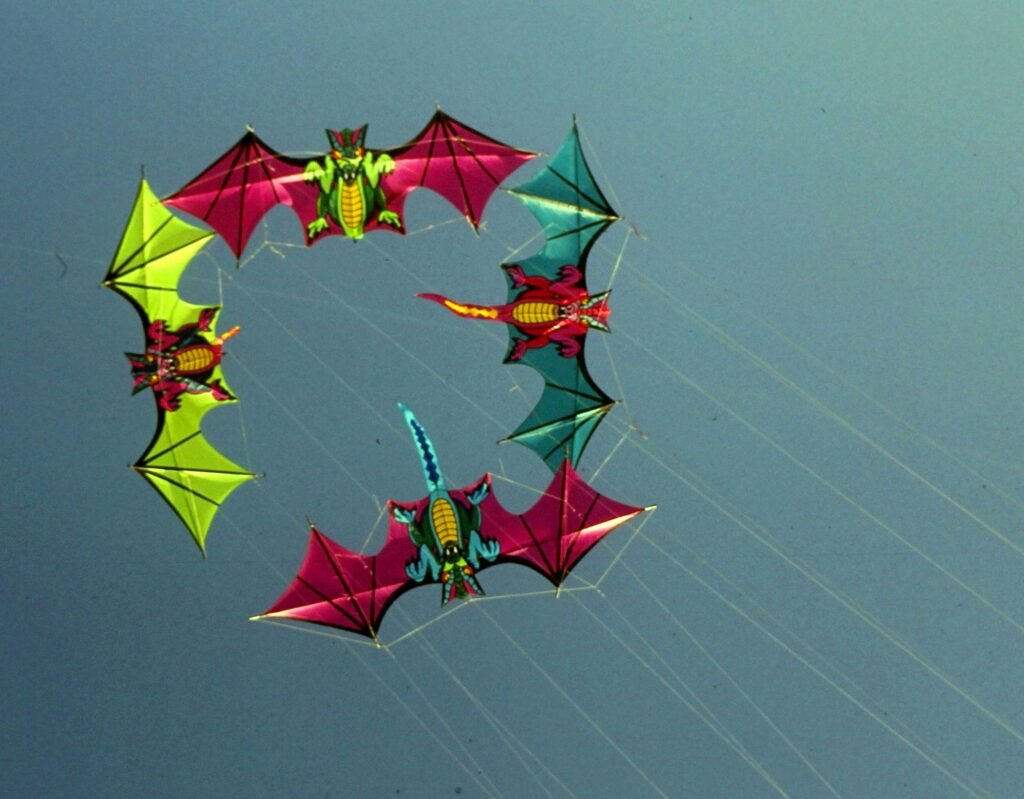
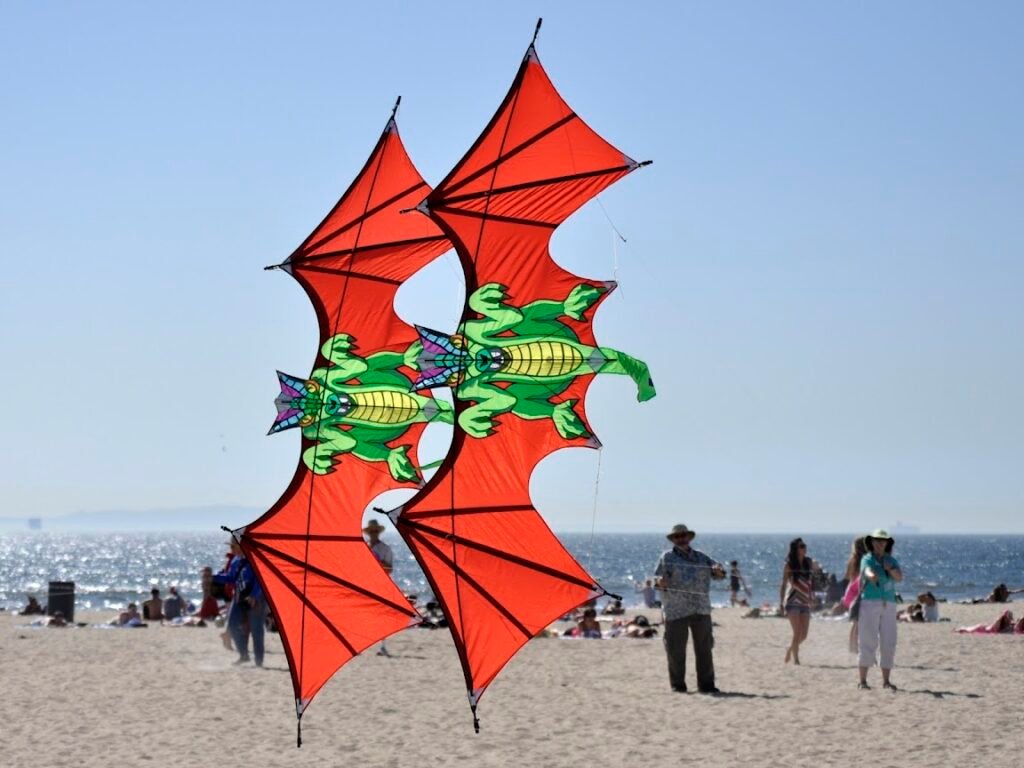
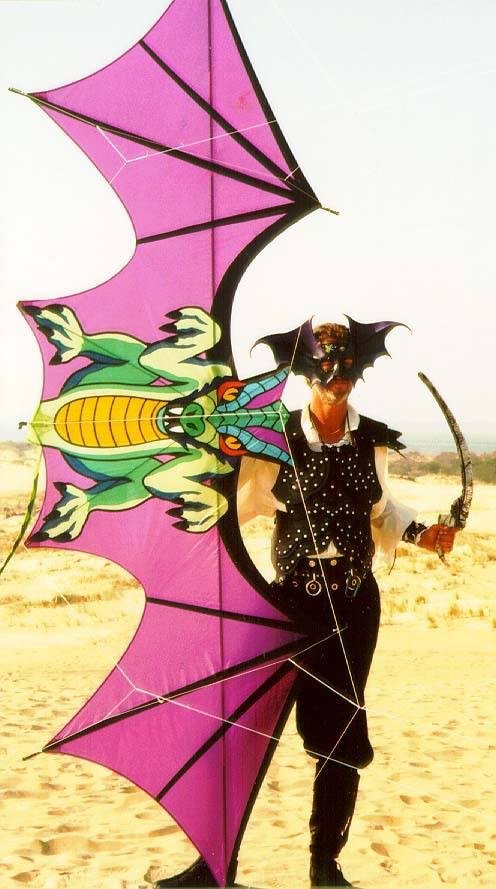
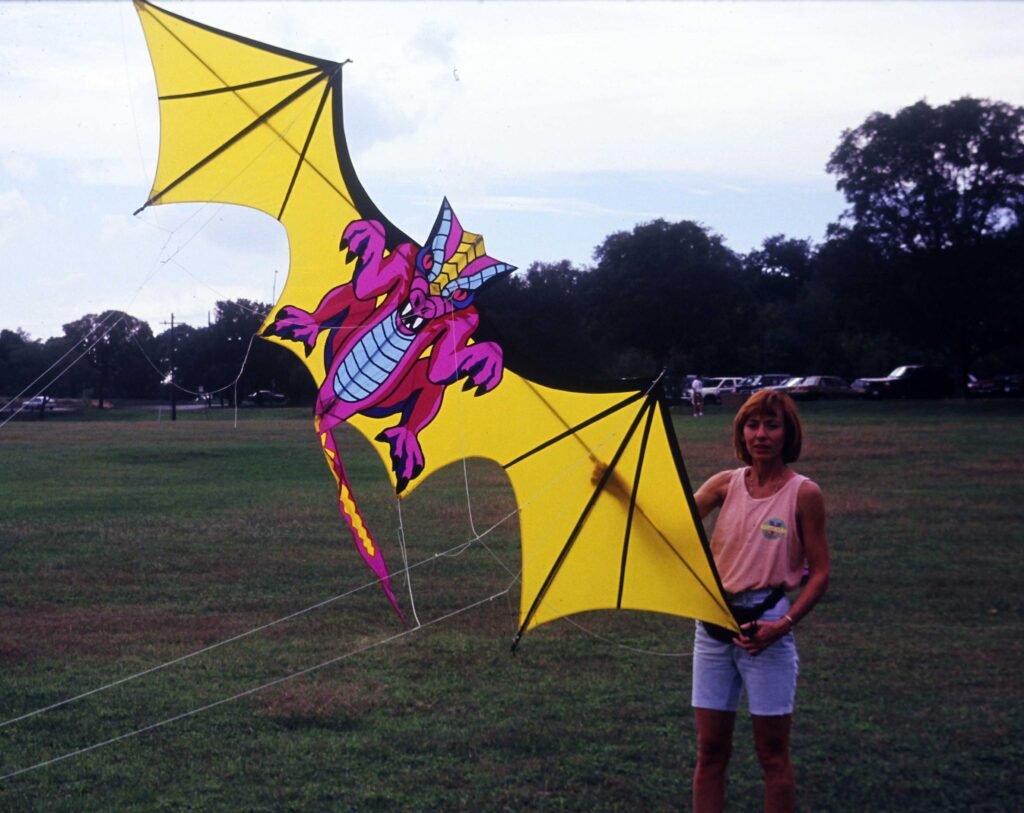
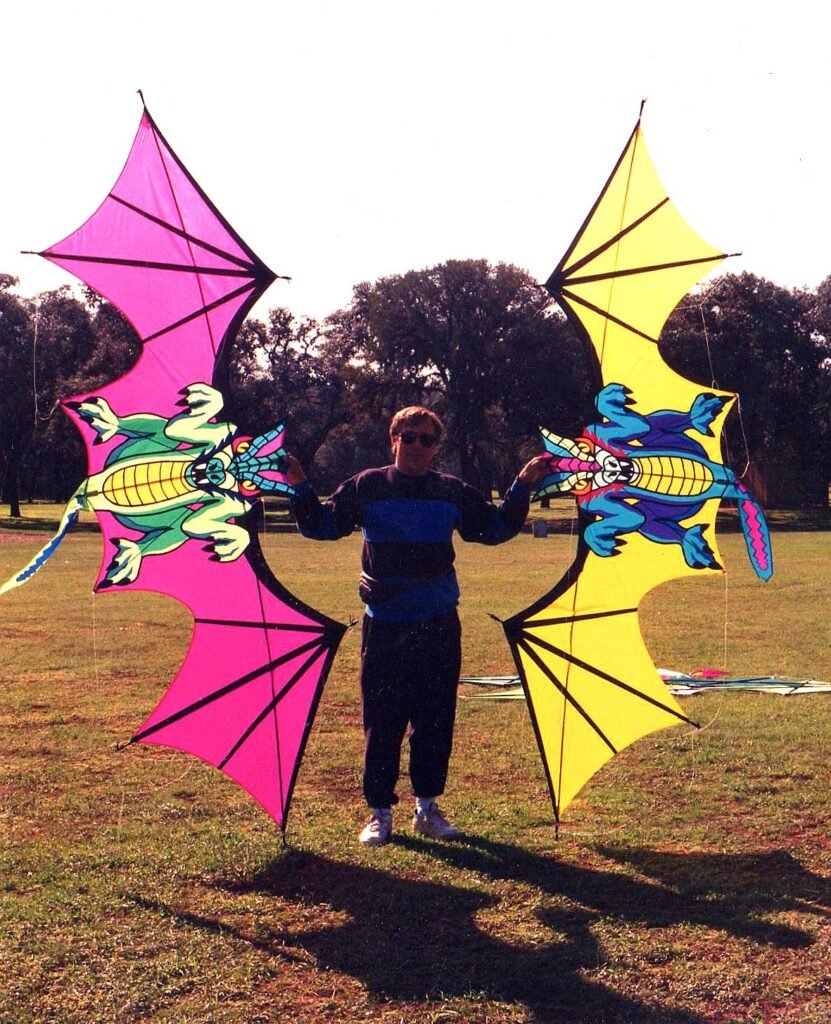
Throughout his career Joel experimented with nearly every type of kite imaginable.
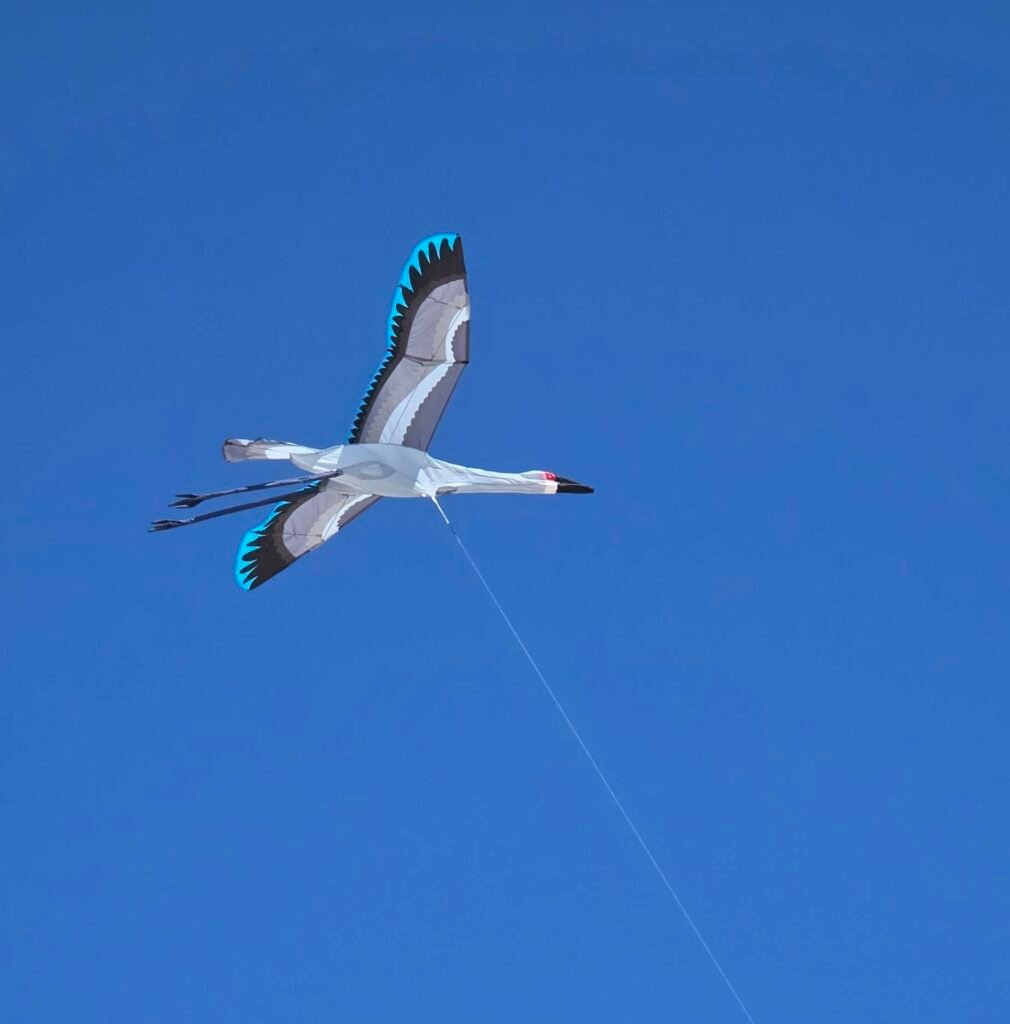
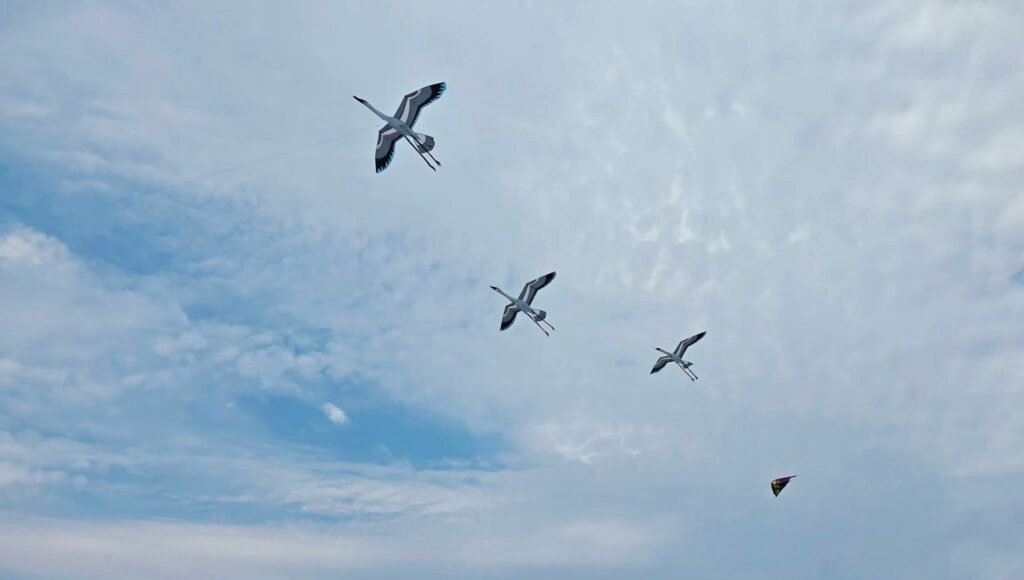
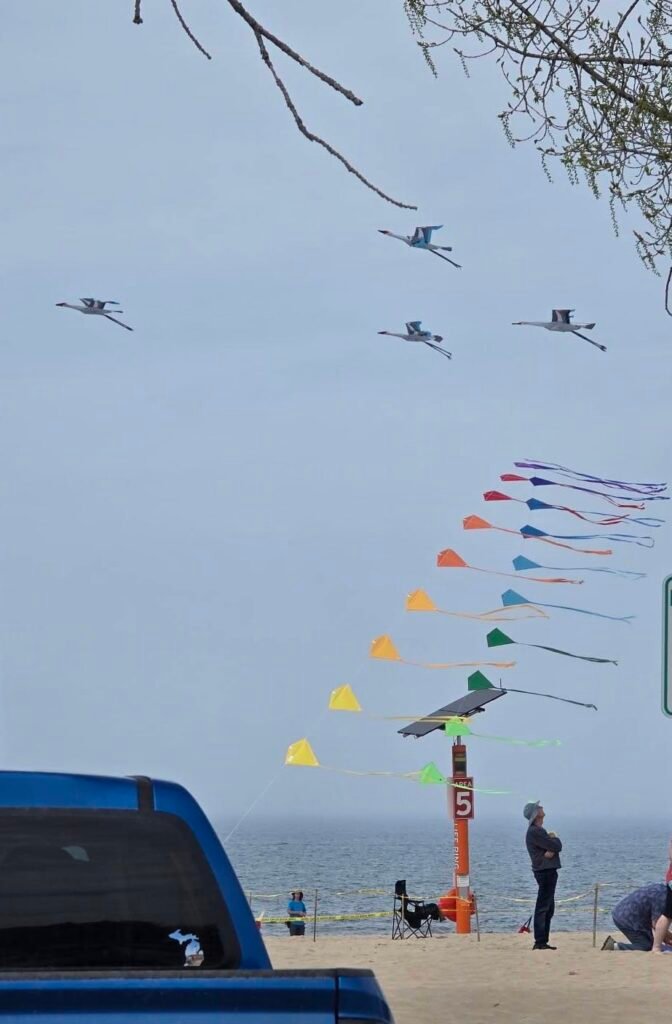
Airplanes, birds, sport kites, quad-line kites, three-dimensional creations. Although he appreciated many different styles of flying, he admitted that single-line kites eventually became his favorite. Among those favorites are his large three-dimensional birds, including his recent Whooping Crane, a kite he still speaks about with excitement today.
The Triangulation Kite
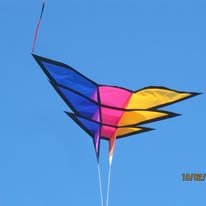
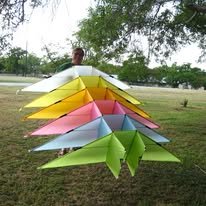
While Joel talked about many favorite designs, there was one kite that stood apart for another reason. The Triangulation Kite. According to Joel, it became his most successful design simply because of its longevity. It first entered production around 1988. For roughly forty years it remained in production. Very few kite designs can make that claim. The story behind the kite was just as interesting. Joel had traveled to California after being invited by Frank Alonzo, who was a large kite manufacturer and wholesaler at the time. Frank showed Joel around his factory, exposing him to countless kite designs and ideas throughout the day. That evening Joel returned to his hotel room. As he lay there thinking about everything he had seen, a brand-new kite design appeared in his imagination. He believes everything he observed earlier that day somehow came together in his mind, eventually becoming the Triangulation Kite. Sometimes inspiration doesn’t happen at the drawing table. Sometimes it arrives after the day is already over.
Joel’s Greatest Contribution
As much as Joel appreciates many of his individual kite designs, he believes his biggest contribution to kite design isn’t actually a kite at all. It’s a system.
He calls it the Magic System.
I asked Joel to explain exactly what that meant. What followed was one of the most fascinating parts of our entire conversation. Joel explained that his system centers around a sliding kingpin that replaces the traditional dihedral arrangement found on many kites. Instead of relying on large bridles to create stability, the kingpin allows the angle of the wing to be adjusted by sliding it forward or backward, changing the height of the leading edge. The result is a kite that becomes remarkably efficient while remaining stable across an unusually large wind range. Joel described one of his large bird kites that originally required a complicated six-legged bridle. Like many kite flyers know, rolling up a kite with a complicated bridle often means spending the next twenty minutes untangling everything before you can fly again.
One day Joel built another version using his new kingpin system. The difference surprised him. “It would fly in almost no wind,” he told me.
“But it was still capable of flying in high winds.”
At first Joel thought he had simply stumbled onto a particularly successful bird design. He spent quite a while building additional versions, believing the improved performance came from subtle changes in wing angles or body proportions. Then almost by accident, he installed the same kingpin system onto another bird kite—a Canadian Goose.
To his surprise…
The goose actually flew even better. That was the moment everything clicked.
“It dawned on me,” Joel said, “it was the system itself that was making these things fly so well.”
Today that same Magic System powers many of his current bird kites, including the beautiful Sandhill Cranes he continues building today. It has also virtually eliminated the complicated bridles that frustrated him for so many years while dramatically increasing the usable wind range of the kites. According to Joel, many of these birds are capable of flying in winds ranging from around four miles per hour all the way up to twenty miles per hour, making them incredibly versatile flyers.
Still Looking Forward
One thing I enjoyed about talking with Joel is that even after more than forty years of designing kites, he still talks like someone with another project waiting on the workbench.I asked him if there was anything he had always wanted to accomplish but never quite pulled off.
His answer came immediately.
Flying birds. Not just one. An entire flock.
Joel has spent years trying to create a system that allows multiple bird kites to fly together in a realistic V formation, just like migrating birds.
“I’ve gotten pretty close,” he told me.
The Sandhill Cranes he’s currently building may be the closest he’s ever come to making that dream a reality. But even today he admits he hasn’t completely accomplished exactly what he has envisioned. He plans to keep at it until he find success or gets closer to it. Knowing Joel, I wouldn’t bet against him getting it right. When our interview came to an end, I thanked Joel for taking the time to spend more than an hour talking with me.
Joel said
“Well, I thank you. I’ve enjoyed talking to you Ziggy, and we’ll be in touch I’m sure.”
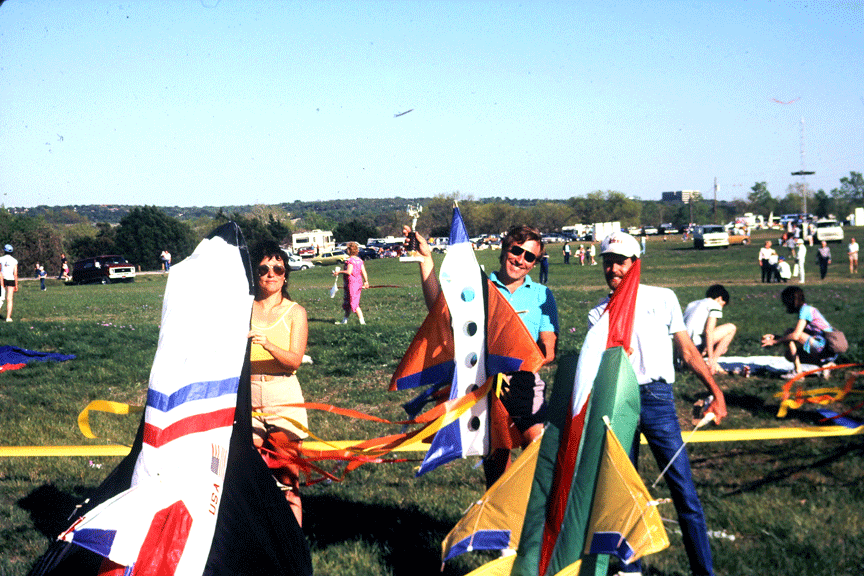
Happy winds to everyone and here are some last minute photos provided by Joel.
Love Ziggy